
Independent Women's Skincare & Wellness Education · Informational content only — read our editorial disclaimer.
Women's Skin Wellness Guide

Essential Vitamins & a Mindful Routine for Naturally Radiant Skin

Healthy-looking skin is rarely about complicated ten-step shelves. Discover how key vitamins—from dietary Vitamin C and E to topical Niacinamide and gentle evening retinoids—work alongside a consistent daily skincare ritual to support comfort, hydration, and luminosity.

Evidence-Informed Guide
Updated November 2026
8-Minute Read
Woman in soft natural morning light gently applying facial serum as part of a calm daily skincare routine
Inside & Out Approach

Combining nutrient-dense daily meals with gentle, barrier-respecting topical care supports resilient skin at every stage of life.

01 Barrier First

Gentle cleansing and lipid-rich hydration help keep skin calm and comfortable.

02 Antioxidant Support

Vitamins C and E help defend skin against everyday environmental oxidative stress.

03 Daily Photoprotection

Broad-spectrum SPF 30+ remains the cornerstone of every morning routine.

04 Whole-Food Nutrition

Colorful produce, healthy fats, and adequate hydration nourish skin from within.

Skin Nutrition & Topicals

6 Key Vitamins That Support Healthy-Looking Skin

Both nutritional intake and well-formulated topical skincare play complementary roles in maintaining skin elasticity, moisture retention, and tone. Filter below by your primary skin goal.

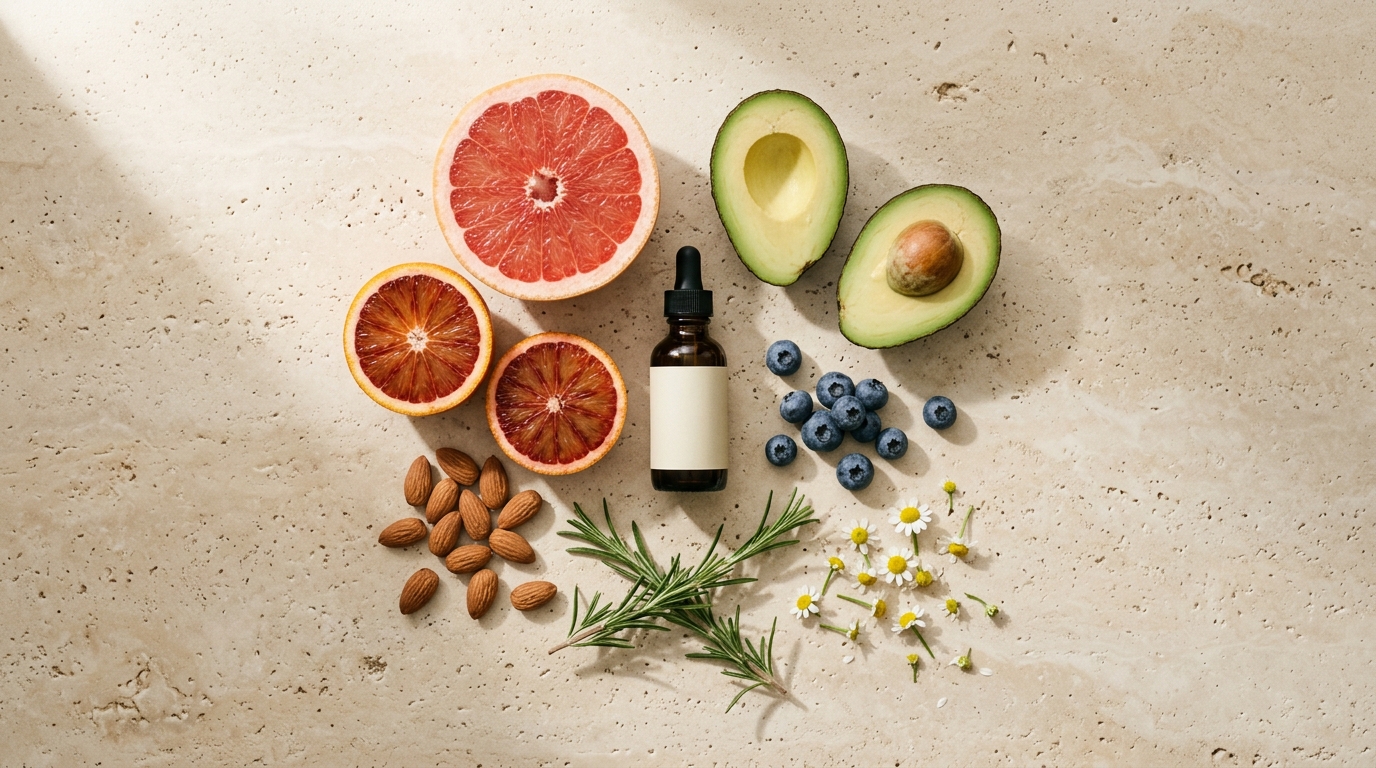
Fresh citrus fruits, avocado, almonds, blueberries, and a minimalist amber serum dropper arranged on travertine stone
Diet + Topical Synergy

Why Both Food and Skincare Matter

Your skin is your body's largest organ, continuously renewing itself using nutrients supplied through a balanced diet. Vitamins obtained from whole foods support overall cellular processes, while targeted topical formulas deliver concentrated antioxidants and humectants directly to the outer layers of the skin.

Before adding high-dose oral supplements to your regimen, consider reviewing your diet and consulting a qualified healthcare professional or registered dietitian.

Antioxidant & Glow

Vitamin C

L-Ascorbic Acid & Gentle Derivatives

A water-soluble antioxidant essential for normal collagen synthesis. In morning skincare routines, stabilized Vitamin C serums help support a brighter, more even-looking complexion and complement daily sunscreen against environmental stressors.

Dietary Sources: Citrus fruits, kiwi, strawberries, red bell peppers, broccoli.
Topical Tip: Apply in the morning on clean, dry skin before moisturizer and SPF. Sensitive skin often prefers 5%–10% or gentle derivatives like THD ascorbate.
Barrier & Balance

Vitamin B3 (Niacinamide)

Multi-Tasking Barrier Supporter

Widely appreciated across dermatology-informed routines for its versatility and gentleness. Niacinamide helps support natural ceramide production, promotes balanced oil levels, and refines the appearance of uneven skin texture.

Dietary Sources: Poultry, tuna, brown rice, mushrooms, peanuts, green peas.
Topical Tip: Formulas around 2%–5% are typically well-tolerated for both morning and evening layering alongside most other hydrating ingredients.
Lipid Nourishment

Vitamin E

Tocopherol & Tocotrienols

A fat-soluble antioxidant that naturally resides in the skin's lipid layer. Vitamin E helps soften dry patches, supports moisture retention, and works synergistically with Vitamin C to boost antioxidant stability in skincare formulations.

Dietary Sources: Almonds, sunflower seeds, avocado, spinach, extra-virgin olive oil.
Topical Tip: Look for tocopherol paired inside Vitamin C serums or nourishing barrier creams, especially in dry or windy climates.
Overnight Renewal

Vitamin A

Beta-Carotene & Cosmetic Retinoids

Dietary Vitamin A supports normal skin cell turnover, while over-the-counter cosmetic retinol is commonly used in evening routines to support smoother texture and the appearance of firmness over time.

Dietary Sources: Sweet potatoes, carrots, kale, spinach, cantaloupe, eggs.
Caution Note: Introduce topical retinol slowly (1–2 nights/week) with moisturizer and daily SPF. If pregnant or nursing, avoid topical retinoids and consult your doctor.
Soothing Humectant

Vitamin B5 (Panthenol)

Pro-Vitamin B5 Moisture Magnet

A comforting humectant and emollient that attracts water into the upper layers of the skin while supporting moisture-barrier recovery. Ideal for women experiencing seasonal dryness, tightness, or sensitivity.

Dietary Sources: Avocados, whole grains, eggs, lentils, sweet potatoes, yogurt.
Topical Tip: Pairs effortlessly with hyaluronic acid, glycerin, and ceramides in soothing mists, serums, and night creams.
Holistic Skin Wellness

Vitamin D

Essential Micronutrient for Overall Balance

Vitamin D contributes to normal immune function and overall skin barrier biology. Because unprotected UV exposure carries skin health risks, dermatologists generally recommend obtaining Vitamin D through diet and clinician-guided supplementation rather than tanning.

Dietary Sources: Salmon, sardines, egg yolks, UV-exposed mushrooms, fortified plant milks.
Wellness Tip: Ask your healthcare provider for a simple blood test before choosing a daily Vitamin D supplement dose.
Step-by-Step Ritual

A Balanced Morning & Evening Skincare Routine

Consistency matters far more than complexity. Switch between Morning (AM) and Evening (PM) routines below and select your skin type to see tailored texture and vitamin-pairing suggestions.

Skin Type:
1

Gentle Hydrating Cleanse

Vitamin B5 Friendly

Wash with lukewarm water and a mild, pH-balanced cleanser for 30 seconds to remove overnight oil and sweat without stripping your natural lipid barrier.

Balanced skin tip: A gentle gel-cream cleanser leaves skin soft and ready to absorb water-based serums.
2

Antioxidant Vitamin Serum

Vitamins C + E

Apply 3–4 drops of a stabilized Vitamin C serum (often paired with Vitamin E) to dry skin on your face, neck, and chest to support luminosity and daytime antioxidant defense.

Balanced skin tip: A 10%–15% L-ascorbic acid serum with tocopherol works well under lightweight daytime moisturizers.
3

Barrier-Supporting Moisturizer

Niacinamide (B3) + Ceramides

Seal in hydration with a moisturizer containing humectants like glycerin or hyaluronic acid alongside skin-identical lipids to keep your complexion comfortable throughout the day.

Balanced skin tip: Choose a silky lotion texture with ceramides and 2%–5% niacinamide for smooth wear under sunscreen.
4

Broad-Spectrum Sunscreen (SPF 30+)

Daily Essential

Finish every morning—rain or shine—with broad-spectrum SPF 30 or higher across your face, ears, and neck. Reapply every two hours during extended outdoor exposure.

Balanced skin tip: Apply roughly two finger-lengths of sunscreen 15 minutes before heading outdoors; tinted mineral or sheer fluid formulas layer gracefully under makeup.
Ingredient Harmony

Smart Vitamin Layering: What Pairs Well & What to Separate

Knowing how active skincare vitamins interact helps you get the most comfort from your routine while avoiding unnecessary irritation.

Supportive Combinations

Pairings That Work Beautifully Together

  • Vitamin C + Vitamin E + Daily SPF (Morning) Vitamins C and E complement each other as water- and fat-soluble antioxidants. Wearing them beneath broad-spectrum sunscreen provides strong daytime environmental defense.
  • Niacinamide (B3) + Panthenol (B5) + Hyaluronic Acid A calming, hydration-focused trio suitable for almost all skin types, including dry or sensitive skin looking to reinforce barrier comfort.
  • Gentle Retinol (Vitamin A) + Ceramide Moisturizer (Evening) Applying moisturizer before and/or after a pea-sized amount of cosmetic retinol ("moisture sandwiching") helps buffer dryness while you build tolerance.
Use With Care / Separate

Combinations Best Split Across Your Schedule

  • Potent Vitamin C + Topical Retinol Both are effective actives with different optimal pH environments. Using Vitamin C in the morning and retinol on selected evenings keeps routines simpler and gentler.
  • Topical Retinol + Strong AHA/BHA Exfoliants Layering strong exfoliating acids and retinoids in the same evening can overwhelm the skin barrier. Alternate nights and include plain "recovery nights" with only cleanser and moisturizer.
  • High-Strength Multiple Actives at Once More percentages do not automatically mean better outcomes. Moderate, well-formulated concentrations used consistently are usually kinder and more sustainable.
Nourish From Within

Everyday Whole-Food Sources of Skin-Supporting Vitamins

A colorful, varied pattern of meals provides vitamins alongside fiber, polyphenols, and healthy fats that work together to support overall wellbeing.

Vitamin Primary Role in Skin Wellness Everyday Food Sources Practical Routine Note
Vitamin C Essential cofactor in normal collagen synthesis; antioxidant defense Oranges, kiwi, strawberries, red & yellow bell peppers, broccoli, papaya Heat-sensitive—enjoying some fresh raw produce daily helps preserve content.
Vitamin E Lipid-soluble antioxidant supporting moisture barrier integrity Almonds, hazelnuts, sunflower seeds, avocado, spinach, olive oil Fat-soluble; absorbed best alongside meals containing healthy dietary fats.
Vitamin A & Beta-Carotene Supports normal epithelial maintenance and skin cell turnover Sweet potatoes, carrots, pumpkin, kale, spinach, apricots, eggs Prefer whole-food carotenoids; avoid excessive supplemental Vitamin A without medical guidance.
Vitamin B3 (Niacin) Supports cellular energy metabolism and healthy skin barrier function Turkey, salmon, brown rice, portobello mushrooms, legumes, peanuts Pairs well with a balanced protein-rich diet and gentle topical niacinamide.
Vitamin B5 (Pantothenic Acid) Involved in lipid synthesis and overall hydration support Avocado, eggs, whole oats, lentils, sunflower seeds, Greek yogurt Widely present across minimally processed whole foods.
Vitamin D Supports normal immune balance and broader skin wellness Fatty fish (salmon, mackerel), egg yolks, UV-treated mushrooms, fortified dairy/plant milks Discuss blood testing and appropriate supplementation with your healthcare provider.

General nutritional information aligns with publicly available educational resources such as the U.S. National Institutes of Health (NIH) Office of Dietary Supplements. Individual nutritional needs vary by age, health status, pregnancy, and lifestyle.

Common Questions

Frequently Asked Questions

Clear, straightforward answers to the questions women ask most often about skin vitamins and daily skincare habits.

A balanced, nutrient-rich diet is the ideal foundation because whole foods supply vitamins alongside phytonutrients and healthy fats. Topical skincare serums (such as Vitamin C or Niacinamide) complement your diet by delivering targeted antioxidants directly to the outer layers of the skin. Oral supplements can be helpful if you have a confirmed nutritional gap, which is best evaluated with a physician or registered dietitian.
Most dermatology-informed routines thrive on just three to four consistent steps: a gentle cleanser, a moisturizer suited to your skin type, and broad-spectrum SPF 30+ each morning. Once those essentials feel comfortable, adding one targeted vitamin serum (like morning Vitamin C or evening Niacinamide/gentle retinol) is usually plenty.
Hydration and softness can often be felt within days, while surface turnover and tone-evening support from ingredients like Vitamin C, Niacinamide, or gentle cosmetic retinol generally take 6 to 12 weeks of steady use to evaluate fairly. Results always vary from person to person depending on genetics, sun protection habits, sleep, and overall health.
Many hydrating and antioxidant ingredients such as Vitamin C, Vitamin E, Niacinamide (B3), and Panthenol (B5) are commonly discussed as gentle options, whereas topical retinoids (Vitamin A derivatives) and high-dose Vitamin A supplements are generally avoided during pregnancy. Always review both your skincare products and dietary supplements with your OB-GYN, midwife, or dermatologist.
Pause the new active product immediately and return to a simple, fragrance-free cleanser, plain barrier moisturizer, and sunscreen until your skin feels calm again. If redness, burning, or a rash persists, stop use and consult a board-certified dermatologist for individualized advice.